Between Rus' and the Cossacks: the Lithuanian–Polish era
Not Moscow, but Central Europe
After the mid-fourteenth century, the Ukrainian lands entered not the Muscovite but the Central European political sphere. Galicia and part of Podillia passed to the Kingdom of Poland (formalized from 1434 as the Ruthenian and Podolian voivodeships), while Volhynia, Kyiv, Chernihiv, and Eastern Podillia passed to the Grand Duchy of Lithuania; the south and east remained under the rule of the Golden Horde[1]. This was a living, settled space with its own administration — not an “emptiness” between Rus’ and Russia, as the imperial narrative presents it.
Lithuania and Moscow: competing for the Rus’ inheritance
The Grand Duchy of Lithuania was to a large extent a Ruthenian state by culture (the Ruthenian language, the Ruthenian legal and cultural heritage). And it was precisely over these Rus’ lands that the Grand Duchy competed with the Grand Duchy of Moscow. The conflict was so acute that at the beginning of the sixteenth century Lithuania lost roughly one-third of its territory as a result of a series of wars lost to Moscow; not even dynastic marriages between the rulers settled the matter[2].
These wars ran almost without interruption from the late fifteenth to the early sixteenth century — and Moscow was not the only side that won them. A telling example is the Battle of Orsha on 8 September 1514: a Lithuanian-Ruthenian army under the Grand Hetman of Lithuania, Prince Kostiantyn Ostrozky (a Ruthenian, Orthodox magnate of the Grand Duchy), utterly routed the far more numerous Muscovite regiments[29]. It is telling that this happened in the very same year, 1514, in which Moscow had just taken Smolensk — that is, this was precisely a military contest for the Rus’ lands (the Muscovite–Lithuanian War of 1512–1522), not a “peaceful gathering of an inheritance.”
Hence the key conclusion: Moscow did not “inherit” the Rus’ lands — it acquired them by war, competing with Lithuania. This shatters the myth of Moscow as the sole natural heir of Rus’ (more on this in “How Rus’ Became Russia”).
The nobility as the political nation
The political nation of the era was the nobility (szlachta): it was the nobility that decided the major questions, while the peasantry and townsfolk had almost no voice. Society was estate-based, yet not entirely closed — a certain mobility existed: some townsfolk of Lviv, for example, managed to cross into the noble estate[3].
European law and legal pluralism
The Ukrainian lands lived under European law. The Statute of Wiślica became the basis of “Crown law” for the Ruthenian and Podolian voivodeships, and the towns enjoyed Magdeburg law. Moreover, a striking legal pluralism prevailed here: in Kamianets-Podilskyi, three urban jurisdictions operated simultaneously — Magdeburg, Ruthenian, and Armenian — each with its own law within a single town[4]. This was a European, multiethnic legal order centuries before “Russia” appeared.
Not an emptiness, but continuity of the elite
Why, then, is this period so easily portrayed as a “failure”? Because sources about it are scarce — and it is precisely on this scarcity that the imperial scheme feeds. As the historian Serhii Olefir notes, up to the mid-thirteenth century there existed a Rus’ state; with the arrival of the Mongols, Lithuania, Poland, and Muscovy appear on the historical maps of Ukraine — while Ukraine’s own statehood seemingly vanishes, and of the fourteenth to sixteenth centuries “we cannot say for certain what was there,” because written sources are lacking[5].
But continuity is provided not by the state, but by the elite. The Rus’ elite did not go anywhere — it began to serve new overlords (Lithuanian, Polish) while remaining in place: the Rurikid lines continued to rule, just as in Europe foreign dynasties ruled local lands (for example, German dynasties on the British throne). If one looks not at the coat of arms of the state but at this elite and population of the fourteenth to sixteenth centuries, one sees continuity — at first common-Slavic, and then properly Ukrainian[6]. This is the very soil from which the Cossacks would grow — not a “no man’s land” between two “Russes.”
How the label was rewritten, not the substance
It is telling how mechanically the imperial scheme has eaten its way even into museum captions. Olefir recalls a concrete case: Soviet museum captions were thoroughly Russo-centric — in the early 2000s they still spoke of the “formation of the Russian centralized state of the fourteenth to sixteenth centuries” on Ukrainian lands. Later the captions were redone — but often the word “Russian” was simply swapped for “Ukrainian”: now the visitor reads about the “formation of the Ukrainian centralized state of the fourteenth to sixteenth centuries”[7]. Changing the label without changing the flawed frame leaves the same error in place: an anachronistic scheme of a “centralized state” is imposed on the Ukrainian lands of this period, whereas in reality they lived under different political and legal systems — those of the Grand Duchy of Lithuania and the Kingdom of Poland, with European law.
The Cossacks: not an “exit,” but a search for a place in Europe
It was from this European soil that the Cossacks grew — and their state, too, arose not as a “reunification with Russia” but within the Commonwealth’s system. Modern historiography describes the Khmelnytsky uprising of 1648 as a “Cossack revolution”: the Cossacks did not intend to leave the Polish–Lithuanian Commonwealth but were seeking a place for themselves within its political structure — the right to self-government, so that the Polish authorities would not interfere in the lands under Cossack control[8]. By the Treaty of Zboriv (1649), a Cossack state effectively came into being — the Zaporozhian Host; after the defeat at Berestechko (1651), the rights of the Cossacks were curtailed[9].
Then a purely European logic of vassal–seigneurial relations came into play: if the lord does not protect the interests of the vassal, the vassal has the right to pass to another lord. This was a familiar mechanism in the Europe of the day — the Duchy of Prussia, for instance, likewise recognized the Polish crown as its suzerain[30]. (In Dribnytsya’s account this dependence is dated to 1410, to the Battle of Grunwald that broke the Teutonic Order; in fact the vassalage itself was formalized later: the Second Peace of Thorn of 1466 made the Order’s state a fief of the Polish crown, and the Duchy of Prussia, secularized in 1525, became a hereditary fief after the Prussian Homage of Albrecht Hohenzollern in Kraków.) Such a lord the Cossacks found in the person of the Muscovite tsar Alexei Mikhailovich (the Articles of March 1654) — but one could equally have been found in the person of the Ottoman sultan: Khmelnytsky did in fact accept Ottoman suzerainty (1651), and the sultan (Mehmed IV) recognized him as a vassal ruler of the Moldavian type[10]. This was no empty formality: according to Dribnytsya, from the sultan Khmelnytsky received the very insignia of power — a mace (bulava) and a cap[31], that is, the regalia of a vassal ruler of the Moldavian-Wallachian type. In other words, Moscow was one of several possible suzerains, not a “natural center of gravity”; more on the act itself in the article “Pereiaslav 1654”.
Division along the Dnipro and the myth of the “purchased Kyiv”
The military rivalry over the Cossack lands continued until 1686 — the so-called Eternal Peace, which divided the Ukrainian lands along the Dnipro: the left bank passed to Muscovy, the right bank to the Commonwealth[11]. To this is attached a widespread Russian trope: that “Kyiv was bought from the Poles for four carts of gold and silver.” A trifling detail explains the mechanism: Kyiv lies on the right bank and should have gone to Poland, but Moscow negotiated a compensation — and kept the city for itself[12].
The reality looks even less like a “purchase” than even this retelling suggests. Kyiv had been under Muscovite control already since the Truce of Andrusovo of 1667 (formally “temporarily”), and the Eternal Peace of 1686 merely secured it for Moscow permanently — in exchange for a monetary compensation to the Commonwealth (about 146,000 rubles), and the Polish Sejm never even ratified this treaty. “Four carts of gold” is a folkloric formula, not a fact: what is meant is a diplomatic compensation within the framework of a peace treaty, not a marketplace deal in which a city can be “bought.”
Two different states, not “runaway serfs”
The imperial narrative reduces the Cossacks to a band of “runaway serfs” — and obscures the fact that this concerned two separate state structures. The Zaporozhian Host (the north — the Kyiv, Chernihiv, and Zhytomyr regions) existed as a state from 1649 to 1764; the Lower Zaporozhian Host, that is, the Zaporozhian Sich (the south), was a separate territory and order, from the mid-sixteenth century until 1775. Both were abolished by Catherine II[13]. The last kosh otaman of the Sich, Petro Kalnyshevsky, was exiled to the Solovki, where he lived to a great old age (by traditional estimates, about 112 years); and in the Hetmanate the very title of hetman was abolished under Kyrylo Rozumovsky, the regimental-company order was liquidated, and the documents were carried off to St. Petersburg[14].
Soviet historiography did indeed emphasize the flight of peasants from serfdom — and that happened too. But this is only part of the picture: the Sich was formed above all as a military-estate community (its backbone was the petty nobility, and only later did townsfolk and peasants flee there) with elective offices — a kind of “democracy of the early modern period”[15]. This was not a “wild steppe of fugitives” but a self-governing structure of the European type — the same legal gene as the Magdeburg towns and the Commonwealth’s noble tradition.
It is worth distinguishing the very components of this estate. The registered Cossacks — those whom the Polish authorities officially took into service and entered into the register — the Commonwealth deliberately kept within tight limits: after the Kurukove Agreement of 1625 the register stood at 6,000, and it reached its maximum — 8,000 — only after the suppression of the uprising of Taras Fedorovych (Triasylo) in 1630 (the Pereiaslav Agreement)[32]. It was precisely this artificial boundary between the “enrolled” and the rest of the Cossacks that fed the tension. Yet despite the division into registered and lower Cossacks, from the end of the sixteenth century they rose together again and again: the first such uprising was raised by Kryshtof Kosynsky (1591), and from 1591 to 1637 there were more than five of these joint risings of registered Cossacks, the lower Cossacks, and the peasantry[33]. In other words, the Cossacks were not a scattered band of “fugitives” but a community capable of coordinated political and military action.
The Cossacks were a full-fledged estate with their own rights and obligations. A registered Cossack paid the state not in money but with a “tax of blood” — he fought, and in exchange was exempted from the direct taxes and state-wide obligations that fell upon the nobility and townsfolk; in addition, the Cossack held economic privileges (distilling, the right to keep an inn, the keeping of promissory notes), and land of “Cossack tenure” could not pass to a non-Cossack owner[26]. This was not a “free-for-all” but a legally formalized estate of early modern Europe.
The Sich itself was not reducible to a fortified camp. Alongside the Sich proper (a military camp without women) there existed a territory under its control with homestead farms — zymovnyky, where well-off Cossacks raised families; within the Cossack body there was marked social stratification — from very wealthy proprietors to the “have-nots” (holota) who hired themselves out to them. The Cossacks lived by trades (salt, potash — a component of gunpowder — hunting, fishing), that is, they ran a real economy rather than only fighting[28]. After the abolition of the Sich in 1775, some of the Zaporozhians resettled to the Kuban, and some to the Ottoman Empire, where the religiously tolerant authorities did not regard the Orthodox as enemies; the Danubian Sich survived there right up to 1828[27]. In other words, the Cossacks did not “dissolve” after Catherine II’s decree — they continued to exist for another half-century beyond the empire’s borders.
The Military Revolution: why the Hetmanate did not “fall behind”
A separate imperial accusation is that the Cossack state was “archaic” beside “modern” Russia. In reality, the Hetmanate was part of the same pan-European process that historians call the Military Revolution. The concept was formulated by the British historian Michael Roberts in studying the Eighty Years’ War of the Netherlands against Spain: the key was a change in military technology — firearms and artillery ended the monopoly of the knightly cavalry, brought infantry and artillery to the fore, and broke the old feudal military system[18].
The new armies were terribly expensive — and for their sake monarchs rebuilt the entire machinery of state: taxation, administration, structure. The most successful states centralized taxes, abolished the tax immunities of the estates, and even “milked” the church through secularization; this type historians named the fiscal-military states (the model being Britain, and to some degree Sweden)[19]. It is precisely in this context that the myth of Russia’s “organic” might collapses: its military leadership was a consequence of Peter’s reforms driven by the needs of the Great Northern War, which “pulled” the Muscovite tsardom out of its self-isolation and gave birth to the empire[20]. Here too, then, power was acquired by reform and war, not “inherited.”
The Hetmanate, too, was a militarized state: the Cossack host was sustained by self-provisioning, while in parallel the hetmans created a standing mercenary army at the state’s expense — with special taxes and obligations, with appointed (not elected) colonels — a classic professional army[21]. Sokyrko’s summation: the Hetmanate was a full participant in the Military Revolution, but “failed to board the train” — it was riding along on it but stepped off prematurely, without having finished building an effective professional army, and this became one of the causes of the loss of statehood[22].
This was not “inferiority” but, on the contrary, a phenomenon of record speed: the Hetmanate built its elite and state in about 50 years, whereas Lithuania or Poland needed 150–200 years for the like[23]. And even after the dismantling of its autonomy, its “genes” proved tenacious: the social and cultural structures formed by the Hetmanate carried over into the nineteenth century, and the Russian Empire was unable to root them out[24].
Poltava and the “autumn of the Hetmanate”
The dismantling of this statehood was drawn out across the entire eighteenth century. The turning point was the Battle of Poltava in 1709: against the backdrop of a pan-European “fashion for absolutism,” two strong figures collided — Peter I and Hetman Mazepa — and each sought to make his power absolute. Mazepa’s defeat (in alliance with Charles XII) put an end to Ukrainian autonomy; more broadly, this was the collapse of the vassal–seigneurial relations of the early modern period and the establishment of centralized states[16] (on the episode itself, see the article “Mazepa’s ‘treason’”).
The dismantling struck above all at elective office — the very core of the Cossack order. Already after Mazepa, Peter I rejected the winner of the election, Pavlo Polubotok, as “too cunning a man” and imposed the more convenient Ivan Skoropadsky upon them; subsequently the senate and the imperial cabinet began to appoint colonels directly — often Serbian officers who did not know local traditions and owed their power to the emperor rather than to the community. The historian Viktor Horobets devoted a separate monograph to this subject — “The Twilight of the Hetmanate”[25]. In this way contractual, elective power was gradually replaced by appointment from above.
Then came the “autumn of the Hetmanate”: under the last hetman, Kyrylo Rozumovsky, autonomy was already more of a “game of independence” — for as long as St. Petersburg permitted it. When Catherine II came to power, the choice became stark: renunciation of the hetman’s power or death. It is telling how the fate of the Cossack upper stratum concluded: the Cossack officers (starshyna) were equated with the Russian nobility — it sufficed to prove one’s rank by document, and a former captain (sotnyk) or regimental judge became an imperial nobleman[17]. Part of the Ukrainian elite integrated into the empire that it had itself helped build — and Cossack statehood vanished from the map.
What this means
Between Rus’ and modern Ukraine there is no “failure” but unbroken continuity: the Lithuanian–Polish era, out of which the Cossacks grew, and the Cossack era, which Moscow dismantled by war and by decree, rather than “inheriting.” Throughout all this time the Ukrainian lands were part of Europe — with their own elite, European law, self-governing towns, and an elective Cossack state. It is precisely this continuity, and precisely the fact that Moscow was only one of several possible suzerains rather than a “natural center,” that the scheme “Rus’ = Russia” erases. And myths such as “Kyiv for four carts of silver” are an attempt to turn conquest and diplomatic bargaining, after the fact, into something “natural and lawful.”
Related persons
- Vitaliy Mykhailovsky — Doctor of Historical Sciences, Borys Grinchenko Kyiv Metropolitan University
References
- [1] summary
Після середини XIV століття українські землі ввійшли не до московського, а до центральноєвропейського простору: Галичина й частина Поділля відійшли до Польського королівства (з 1434 року — Руське та Подільське воєводства), а Волинь, Київ, Чернігів і Східне Поділля — до Великого князівства Литовського; південь і схід були під владою Золотої Орди.
Back to text - [2] summary
Велике князівство Литовське (значною мірою руська за культурою держава) і Велике князівство Московське змагалися за руські землі. Конфлікт був настільки гострим, що на початку XVI століття Литва втратила близько третини території внаслідок низки програних війн із Москвою; навіть династичні шлюби цього не владнали. Тобто руські землі Москва здобувала війною, а не «успадковувала».
Back to text - [3] summary
Політичною нацією доби була шляхта — саме вона вирішувала головні питання, тоді як селянство й міщанство майже не мали голосу. Суспільство було становим, але існувала певна мобільність: частина львівських міщан спромоглася перейти у шляхетський стан.
Back to text - [4] summary
Українські землі жили за європейським правом: Віслицький статут став основою «коронного права» для Руського й Подільського воєводств, а міста користувалися магдебурзьким правом. Понад те, панував правовий плюралізм — у Кам'янці-Подільському водночас діяли три міські юрисдикції (магдебурзька, руська й вірменська), кожна зі своїм правом у межах одного міста.
Back to text - [5] summary
У нас була Русь-держава, ми розуміємо це як державу. З приходом сюди монголів у другій половині XIII століття на картах з'являється Литва, з'являється Польща, на сході з'являється Московія, а Україна… І ми точно не можемо сказати, що там було, тому що у нас фактично теж мало джерел.
Back to text - [6] summary
Сама еліта вона нікуди не поділася: еліта стала служити іншим феодалам, грубо кажучи. І наша українська еліта, ці роди Рюриковичів… тому що в Європі династії — там німецькі правила Британією. Якщо акцентувати увагу на нашій еліті 14–16 століття, то ми можемо говорити і про продовження — слов'янських, у цьому моменті вже українських. Еліта по суті та маси населення нікуди не поділися.
Back to text - [7] summary
Таблички писалися в далекі радянські часи, і вся історія була російськоцентрична. На початку 2000-х там ішлося про формування російської централізованої держави 14–16. Прийшли, сказали: хлопці, треба бути з тими табличками. Слово «російське» — туди вписалося слово «українське», і читаєш про формування української централізованої держави 14–16 століття.
Back to text - [8] summary
Сейчас это оценивается как казацкая революция, когда казачество пыталось найти себе место в политической структуре Речи Посполитой. То есть никто не собирался выходить из состава Речи Посполитой — искали, как получить право на самоуправление, чтобы польская власть не вмешивалась в территории, которые контролировались казачеством.
Back to text - [9] summary
По Зборовскому мирному договору 1649 года фактически было создано казацкое государство — Войско Запорожское. А потом, после победы поляков под Берестечком, права казачества были урезаны.
Back to text - [10] summary
Это система вассально-сеньориальных отношений: если сеньор не защищает интересы вассала, вассал имеет право перейти от одного сеньора к другому. Нашли такого сеньора в лице Алексея Михайловича, хотя могли найти сеньора и в лице турецкого султана, по-моему Мехмед IV, могу ошибаться. В итоге выбрали московское царство — это так называемые Мартовские статьи Богдана Хмельницкого.
Back to text - [11] summary
Война тянулась по 1686 год, так называемый Вечный мир, когда территорию на территории современной Украины разделили по Днепру: левый берег — Московии, правый берег — Речи Посполитой.
Back to text - [12] summary
Как любят русские блогеры рассказывать, что Киев купили у поляков за 4 воза золотом-серебром. Действительно, Киев, поскольку он на правом берегу, должен был отойти Польше, Речи Посполитой, но Москва захотела себе и договорилась о цене — 4 воза серебра — и забрали себе ещё и Киев.
Back to text - [13] summary
Войско Запорожское и то, которое называется Запорожская Сечь — это две разные территории. Войско Запорожское — это Север Украины, Киевщина, Черниговщина, Житомирщина; а Войско Запорожское низовое, условно называемое Запорожская Сечь, — это юг Украины. Они существовали одновременно: низовое — со средины 16 века по 1775 год, Войско Запорожское как государство — с 1649 по 1764 год. Оба государства ликвидированы Екатериной II.
Back to text - [14] summary
Захватили без боя, последним атаманом был Пётр Калнышевский, ему было 80 с чем-то лет на тот момент, его заслали на Соловки, и он там прожил до возраста по моему 112 лет. А был Кирилл Разумовский — его никуда не заслали, его титул гетмана ликвидировали, всё полково-сотенное устройство ликвидировали, все документы забрали в Санкт-Петербург.
Back to text - [15] summary
Советские историки акцентировали внимание именно на побегах крестьян от крепостного права — такое было, но кроме этого Запорожская Сечь формировалась как шляхетское государство. Сначала из шляхты, а потом туда бежали и мещане, и крестьяне. Управление было другое: все должности избирались — условно демократия раннего нового времени.
Back to text - [16] summary
Полтава фактично поклала хрест на автономію України, це початок цього процесу. Це була мода на абсолютизм, кінець XVII — початок XVIII століття, і тут зіткнулися дві сильні особистості — Петро і Мазепа, один і другий намагалися свою владу зробити абсолютною. Це крах васально-сеньйоральних відносин, які існували в Європі, бо це вже по суті новий час.
Back to text - [17] summary
Традиційно це називається осінь Гетьманщини, це вже гра в незалежність: допоки Розумовському дозволяли гратися в цю незалежність, він грався, а як прийшла Катерина II — або шарфик на шию, або відмова від гетьманської влади. Козацька старшина була прирівняна до російських дворян: достатньо було знайти документ, що ти сотник чи полковий суддя, і тебе приймали в російське дворянство.
Back to text - [18] summary
Концепт мілітарної революції сформував британський історик Майкл Робертс, який досліджував воєнну історію Нідерландів і Іспанії XVI — початку XVII століття, так звану Вісімдесятирічну війну. Головний ключ він бачив у зміні воєнної технології: вогнепальна зброя й артилерія ліквідували монополію рицарської кавалерії, зробивши головними родами військ піхоту й артилерію, і зламали феодальну військову систему.
Back to text - [19] summary
Нові армії дорого коштували — заради них монархи перебудовували всю державну машину: податкову систему, адміністрацію, устрій; професійні армії стали головним інструментом упровадження силової монополії. Найуспішніші держави централізували податки (доходи нагору, а не в локальні бюджети), ліквідовували податкові імунітети станів і намагалися «доїти» церкву через секуляризацію — цей феномен історики назвали фіскально-мілітарними державами (Британія, певною мірою Швеція).
Back to text - [20] summary
Те мілітарне лідерство, яке Росія отримала, — наслідок власне модернізаційних реформ Петра, які й народили Російську імперію; їх актуалізували потреби ведення Північної війни, яка і витягнула Московське царство з-поза оцього китайського муру.
Back to text - [21] summary
Козацьке військо існувало на самозабезпеченні, а паралельно гетьмани створили постійну найману армію за державний рахунок — за рахунок спеціальних податків, зборів, натуральних повинностей на це військо. Цю постійну армію контролювали безпосередньо гетьмани, вони самі призначали полковників, у ній не було виборності — це була класична професійна армія.
Back to text - [22] summary
Ми є однозначно частиною цієї мілітарної революції, і Гетьманщина в цей потяг мілітарної революції не встигла сісти — вона в ньому їхала, але передчасно з нього зійшла; не вдалося добудувати ефективну професійну армію, і це стало однією з причин втрати державності.
Back to text - [23] summary
Це не меншовартість: еліта Гетьманщини сформувалася протягом 50 років, по великому рахунку в рекордно короткий термін. У Литви чи Польщі на створення професійної армії й еліти пішло мінімум плюс-мінус 150–200 років, а Гетьманщина все це прокрокувала за якихось півстоліття.
Back to text - [24] summary
Гетьманщина після Гетьманщини: вона сформувала настільки міцні соціальні й культурні гени, які по великому рахунку Російська імперія не змогла витравити; вони перетекли у XIX століття.
Back to text - [25] summary
Перша монографія Горобця — «Присмерк Гетьманщини» — про Петрові реформи, спрямовані на обмеження автономії України. Конкретний демонтаж виборності: після Мазепи на виборах перемагав Павло Полуботок, але Петро I відкинув його як «дуже хитру людину» й нав'язав Івана Скоропадського; далі сенат чи кабінет імператора почав прямо призначати полковників, зокрема сербських офіцерів, які не знали місцевих традицій і завдячували владою імператору, а не громаді.
Back to text - [26] summary
Реєстровий козак сплачував основний податок — так званий податок крові: він воював, і в обмін на це був звільнений від прямих податків і загальнодержавних повинностей, які лягали на дворянство й міщан. Козак мав і економічні привілеї: право на винокуріння, корчму, зберігання векселів; земля з «козацького ґрунту» не могла переходити до некозацького власника.
Back to text - [27] summary
Часть запорожских казаков выбрала переселение на Кубань с семьями, а часть ушла в Турцию. Ушли они на территорию Турции по той простой причине, что турки и Османская империя признавали христиан не врагами; в религиозном плане Османская империя по отношению к христианам была достаточно толерантна. Задунайская Сечь существовала аж до 1828 года.
Back to text - [28] summary
В Сечи женщин не было, это был военный лагерь, но была территория Сечи, которая контролировалась Запорожской Сечью; богатые казаки заводили семьи на хуторах — это называлось зимовник. Казаки делились по социальному статусу: были очень богатые казаки и так называемая голытьба, которая нанималась к богатым. Были промыслы, но не промышленность: варение соли, поташ — это одна из составных частей пороха, охота, рыба.
Back to text - [29] paraphrase
литовское войско наголову разбили московские войска во главе с великим гетманом литовским... это был период войн постоянных между Великим княжеством Литовским и Московским царством, которые тянулась с конца 15 века по начало шестнадцатого века
Back to text - [30] summary
Герцогство Пруссия признавало королевство польское своим сувереном после разгрома Тевтонского ордена; в 1410 году они признали это — но мы не сами стали сувереном, и так далее. Это постоянная смена — общий принцип.
Back to text - [31] summary
Богдан Хмельницкий во время своей войны слал письма и османскому султану, и Алексею Михайловичу — пугал одного другим. И даже от османского султана получил все достоинства: булаву, шапку и так далее.
Back to text - [32] summary
Реестровое казачество максимально до 8000 было после восстания 1630 года Тараса Трясила — это максимальное количество реестрового казачества. А запорожское казачество — цифра постоянно менялась.
Back to text - [33] summary
С конца 16 века вместе поднимали восстания — начинает Криштоф Косинский, 1591 год, и по 1637 год их постоянно, свыше пяти, было совместных — реестровых казаков, низовых казаков и крестьянства.
Back to text
Sources
- book (2015) The Oxford History of Poland-Lithuania, Volume I: The Making of the Polish-Lithuanian Union, 1385–1569 — Oxford University Press An award-winning foundational history of the Polish–Lithuanian union (Oxford UP, 2015; ISBN 978-0-19-820869-3). An independent scholarly basis for the thesis that the Ruthenian lands became part of the Central European sphere.
-
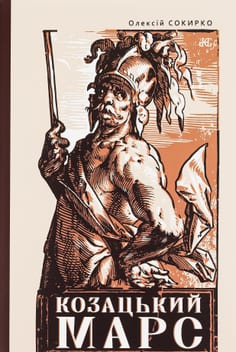 book (2023) Козацький Марс: Держава та військо Козацького Гетьманату в добу Мілітарної революції, 1648–1764 — Tempora A foundational monograph on the army and state of the Cossack Hetmanate in the context of the European Military Revolution (Tempora, 2023; ISBN 978-617-569-627-9). The scholarly basis for the section on the Military Revolution and the fiscal-military state.
 - book (1998) Присмерк Гетьманщини: Україна в роки реформ Петра I — Institute of History of Ukraine, NAS of Ukraine A monograph on the reforms of Peter I aimed at curtailing the autonomy of the Hetmanate and on the establishment of the Little Russian Collegium (Kyiv: Institute of History of Ukraine, NAS of Ukraine, 1998). The scholarly basis for the thesis about the dismantling of elective office.