Self-Governing Ukraine of the Polish-Lithuanian Commonwealth
Self-government instead of a pyramid
According to the research of the historian Natalia Starchenko, the Polish-Lithuanian Commonwealth had no bureaucratic vertical of the kind familiar to us. Offices (posts) were regarded as an act of service to the community: there were no salaries paid for them, and judges in the localities were elected. Order was maintained by self-governing units, not by a state monopoly on violence[1].
That is precisely why historians of the 19th century, who measured the past by the étatist templates of their own age, mistakenly saw here “sheer anarchy.” In reality this was a society built on the principles of self-government — Magdeburg law in the towns, noble self-government in the localities[1].
The rule of law: the Lithuanian Statute
The legal framework provided local autonomy. The Ukrainian voivodeships — Kyiv, Volhynia, Bratslav, and later Chernihiv — were adjudicated by the Second Lithuanian Statute. The Lublin privilege of 1569 expressly forbade altering this Statute otherwise than on the initiative of the inhabitants of the voivodeships themselves[2]. The local community itself enacted the laws that applied within its bounds.
How the Ukrainian lands entered the Crown: the year 1569
The Kremlin narrative portrays the entry of the Ukrainian lands into the Polish-Lithuanian Commonwealth as a simple “conquest by Poland.” In reality, as early as the 14th century these lands became attached to the Grand Duchy of Lithuania — first through dynastic marriages, and definitively after Prince Algirdas’s victory over the Horde at the Battle of Blue Waters in 1362, as a result of which the Kyiv region, the Pereiaslav region and Podolia passed to the Lithuanian-Ruthenian state[24]. Within the Grand Duchy itself the Ruthenian nobility formed the majority, and the Ruthenian language and law were dominant — this was not a “foreign yoke” but a shared Lithuanian-Ruthenian state.
The transfer to the Polish Crown in 1569 was likewise no single-moment “seizure.” According to Dribnytsya, the Ruthenian nobility of Volhynia, the Kyiv region and Podolia willingly went into the Crown of their own accord: they wanted the same electoral rights as the Polish nobility, and did not wish to remain subjects of a prince, as they had been within the Grand Duchy[25]. That is, the driving force was not Polish force but the Ruthenian elite’s own political interest — the aspiration to full-fledged noble self-government.
The mechanics of the transfer are telling too. The Ukrainian voivodeships were removed from the Grand Duchy and annexed to the Crown by separate royal privileges of Sigismund II Augustus, before the final act of union. In the debate, Dribnytsya gives the sequence: the Volhynian voivodeship on 27 May, the Kyiv voivodeship on 1 June, the Bratslav voivodeship on 5 June 1569, “a month before the signing of the final Union of Lublin”[26]. Academic sources date these incorporation privileges to late May – early June 1569 (Volhynia to 26–27 May, Kyiv and Bratslav to early June), and the union act itself to 28 June – 1 July 1569. The chronology matters here: the voivodeships were annexed before the union and each by a separate act — this legally fixed their distinct status rather than dissolving them into a “single Poland.”
Nor was it without resistance. In protest, the Lithuanian delegation walked out of the Sejm of Lublin on the night of 1 March 1569 — after a month of negotiations that had reached a deadlock. Dribnytsya is cautious about the motives: the exact cause, he stresses, “needs to be checked in the Sejm’s records,” and he recommends reading the works of the historian Natalia Starchenko as a specialist on this era[27]. According to the conclusions of historiography, the Lithuanians did not agree with the Polish project of a single state (a common Sejm and foreign policy) and defended the sovereignty of the Grand Duchy, advocating an equal union rather than absorption. In the end, deprived of the support of their own lesser nobility, the magnates returned and were forced to accept the terms. But the very existence of this conflict shows that this was not a “natural” merger but a political struggle over the status of the lands.
”Nothing about us without us”
The king was limited by law. The constitution of 1505 “Nihil novi” established that no resolution could be adopted without the consent of the Sejm — the principle of “nothing new about us without us”[3]. Each voivodeship behaved as a separate republic (which is precisely how “Rich Pospolyta” translates). Starchenko draws a direct line to the modern slogan “nothing about Ukraine without Ukraine” — this is not an innovation but a continuity of tradition[3].
What we today consider “the treasury of democracy” — the inviolability of the person and of property — was likewise an achievement of this political culture, later extended to all citizens[4].
Even the notorious liberum veto was not from the outset an instrument of anarchy, as it is often portrayed. Introduced at the beginning of the 16th century, it was in fact not applied until the middle of the 17th — for nearly a century and a half it served the search for compromise and the protection of the minority from the dictate of the majority: a culture of consensus, not paralysis[8]. And the noble privileges themselves Starchenko directly equates with the Magna Carta: the protection of the person and of private property — it is precisely from here, in her view, that Ukrainian individualism descends, which Muscovy lacked[9].
It is also important that this was not the power of a narrow caste. The nobility in the Polish-Lithuanian Commonwealth made up perhaps the largest share of the population in Europe — from 5–10 to 20–25 percent in various regions — and it was not a homogeneous mass of “feudal lords”: alongside the magnates there existed a petty nobility, sometimes poorer than a peasant, yet equal in rights. And the peasants too were not without rights: the court records register cases in which peasants sue their lord over an excess tax, send a deputation to the king at their own expense — and win the case[10]. This is the picture of a society with a functioning law, not of “savage feudalism.”
An elective king and the “korolevyata”
The Commonwealth was an elective monarchy: the king was chosen by the nobility, not inherited by a dynasty. This is seen most clearly in who was admitted as a candidate at all. In the debate Dribnytsya recalls that among the electors were Ukrainians too — the “Ruthenian” nobility also voted and put forward candidates — and that Prince Ostrozky had a real chance of being elected king: “he even had a chance of [becoming] king… well, it didn’t pan out”[29].
An exact name is needed here, because there were two well-known Ostrozkys and they are easily confused. This is not the elder Kostiantyn Ivanovych Ostrozky (c. 1460–1530) — the Grand Hetman of Lithuania, victor over the Muscovites at Orsha in 1514 — but his son, the Kyiv voivode Vasyl-Kostiantyn Ostrozky (1525/26–1608). It was he — the richest magnate of Rus’, founder of the Ostroh Academy, and defender of Orthodoxy — who at the 1573 royal election (and, by some accounts, whose name was raised later too) figured as one of the possible candidates for the Polish throne. He did not become king chiefly because of his Orthodox faith (the noble majority preferred a Catholic) — and that is the “didn’t pan out” that Dribnytsya refers to. What is telling is something else: the very possibility of a Ruthenian Orthodox prince laying claim to the throne was conceivable within this system — unlike the hereditary Muscovite autocracy, where there was no question of “electing a tsar.”
Nor is the claim about magnates richer than the monarch an exaggeration. The most powerful magnates of the Commonwealth really were called the “korolevyata” (Polish królewięta — “princelings,” “little kings”): their latifundia were states within a state — with their own armies, courts, and even a separate foreign policy. Dribnytsya says that such men “sometimes had more land than the king of Poland”[28] — and Vasyl-Kostiantyn Ostrozky was a vivid example: at the turn of the 16th–17th centuries he held, together with leased crown estates, about a hundred towns and castles and over a thousand villages. This is not a sign of “anarchy” but a structural feature of dispersed, non-state-centralized power: there was no single autocrat to whom everything belonged, but a network of influential families, each with its own rights and resources. (Dribnytsya, in the heat of the moment, tosses out that “half the population had coats of arms” — this is, of course, hyperbole: the share of the nobility, however record-breaking for Europe, ranged in various regions from 5–10 to 20–25 percent, as stated more precisely above[10]. But the underlying logic — power distributed among many highborn owners rather than concentrated in a single crown — is conveyed correctly.)
Not Muscovy: service to another ≠ treason
The sharpest contrast is with Muscovy. The privilege of Casimir of 1447 guaranteed the nobility the inviolability of the person and of property, the right to inherit land (including by daughters), and the right to travel beyond the borders of the country — even into the service of another ruler. And such service was not regarded as treason[5]. In Muscovy, departure into the service of another ruler was a grave crime — the difference lies in the very nature of power: contractual, limited by law — versus autocratic.
The Ruthenian nation: a distinct subjecthood, not “part of Poland”
The Kremlin narrative appropriates the word “Ruthenian/Rus’” for Moscow, and depicts the Polish-Lithuanian Commonwealth as simply “Poland.” In reality the Commonwealth was a country of many peoples, and the Ruthenians-Ukrainians held within it a distinct subjecthood. The Ruthenian nobility of the Polish kingdom did not dissolve into the Polish — it always preserved its Ruthenian belonging; the jurist Jakub Przyłuski, as early as 1553, in his code of laws separately distinguished the “Ruthenian principality” (three voivodeships), behind which, as everyone understood, stood its own statehood tradition[11].
This was not ethnic insularity but rather a dual identity. The ethnic Pole and Catholic Stanisław Orzechowski said of himself: “I am a Ruthenian and proud of it.” Even in the middle of the 16th century people remembered that they descended from old Rus’, which had received Christianity from Constantinople[12]. And a nation, Starchenko reminds us, rests precisely on the memory of a common past: the “Ruthenian people” constructed itself through old Rus’ and the princes — descendants of Volodymyr the Great, drawing symbolic strength from this. Thus the expression “Ruthenian state” was quite current in the Commonwealth: the Ukrainian voivodeships were credited with a statehood tradition that no one even denied[13].
This was formulated most vividly by the Kyiv voivode Adam Kysil in a speech of 1641: “We came not to a state, but with a state, and we came not to a people, but with a people.” Kysil emphasized that the Polish-Lithuanian Commonwealth was a republic of three peoples (Poles, Lithuanians and Ruthenians), and that if the rights of the Ruthenians were violated and not restored, it would turn into a “simulacrum”[14].
That this autonomy was real is involuntarily attested by the imperial officials themselves. The Hetmanate was built upon the legal culture of the Commonwealth: the Cossacks were still, in the 18th century, adjudicated by the Lithuanian Statute — a thing utterly impossible in the Russian Empire. And the memorandum of Hryhorii Teplov “On the Disorders in Little Russia” (1762), with irritation, acknowledges the main point: the “trouble” of the Little Russians is that they have their own rights, which give them an “imaginary freedom” and distinguish them from others who have submitted to the monarch’s power[15]. A hostile witness confirms what the propaganda denies: Ukrainian autonomy and a distinct law actually existed.
What an early modern state is
In order to see that the Cossack state was a full-fledged early modern state, it is worth having a measuring stick. The historian Oleksii Sokyrko, in an article for the Ukrainian Historical Journal, set out six criteria of the “ideal type” of the early modern state. The first three: the sovereign power of the ruler and the political elite over a territory (a state that is at once territorial and dynastic, where the king is influenced by the elite); the presence of stable institutions resting both on public mechanisms and on private ties; complexly structured institutions of governance and law[19]. The rest: the monopoly on violence, which was held not only by the state but also by local cells; representative institutions (sejms and sejmiks); and a gradual secularization — the subordination of the church to secular power[20].
This state itself evolved: from a fiscal-military state (which the prolonged wars of the era of the Military Revolution gave rise to) to a well-ordered state with a new political philosophy that for the first time separated the person of the ruler from the state as such. The bearer of sovereignty became the political people — the estate endowed with the right to influence politics[21]. By all these features, the Ukrainian lands of the Commonwealth and the Hetmanate were not a “borderland without a state” but participants in a pan-European process of state-building.
The Cossack variant of the Commonwealth
This tradition did not vanish with the Cossack revolution — it continued it. According to the research of the historian Viktor Horobets, the Cossacks themselves were not homogeneous: by the middle of the 17th century a distinction was drawn between the Zaporozhian (lower), the town, and the registered Cossacks (taken by the Commonwealth into state service for pay and privileges), whereby the lower Cossacks maintained reciprocal — mutual — relations, while the state ones maintained redistributive relations[6].
Most importantly: the Cossack state — the Hetmanate — was in essence a “Cossack variant of the Polish-Lithuanian Commonwealth.” The Cossack officer class was genetically a product of the Commonwealth’s democracy, and the early modern states were not yet centralized. That is why, when Bohdan Khmelnytsky in 1657 attempted to introduce the hereditary transfer of power to his son Yurii, this contradicted the very political culture of the officers. Moscow, by contrast, saw a different — autocratic — model: the envoy Buturlin frankly wrote that upon the hetman’s death it would be “all as you may wish, sovereign”[7]. The same clash of contractual and autocratic principles as at Pereiaslav in 1654.
It is also worth dispelling the popular myth of “free and equal Cossacks.” The Cossack world was deeply estate-based and heterogeneous — a complex mosaic of ranks (rank-and-file Cossacks, banneret, standard-bearer, and noble fellows), not a brotherhood of equals. Yet there is nothing “underdeveloped” in this: estate-based society was the norm for all of Europe before the Great French Revolution, where each estate had its own set of rights and obligations. The Cossack revolution of the mid-17th century even renewed this estate, bringing into it the petty, “castle” nobility with its military and political experience[16].
But the chief feature of the Cossack order was electivity. The Cossacks held that all offices — hetman, colonels, and captains alike — ought to be elective, unlike the Commonwealth, where the king appointed administrative posts. The logic was explained by Hetman Danylo Apostol: an elected colonel feels responsibility to the community, while an appointed one does not. This electivity was enshrined as a “tradition” in agreements — from the Kurukove agreement of 1625 to the articles in relations with Moscow after 1654[17]. At the same time the Hetmanate was no monolith: between the regiments there were striking differences — in the north (the Starodub and Chernihiv regions) power de facto became hereditary (the Zabila family held the captaincy for about 130 years, until 1782), while in the south, in the Poltava regiment, constant elections continued[18].
The summit of this contractual tradition was the Constitution of Pylyp Orlyk of 1710 — the first written treaty of the Cossack officers with the Cossacks. Its history shows well what an early modern “constitution” was. The document is preserved in two redactions: in the Latin one there is the word Constitution, while in the Church Slavonic one the word “constitution” itself is absent. For “constitutions” at that time meant not a basic law in the modern sense, but agreements — first of all between the king and the nobility[22]. Hence to call it “the first constitution of Ukraine” is rather a modernization: the document itself in fact never came into force (Orlyk controlled only a small part of the Right Bank, and only for a short time), and the first constitution in the modern sense appeared in Ukraine in 1918[23]. Yet as a monument of contractual authority limited by law, Orlyk’s Constitution is a direct continuation of that same Commonwealth-Cossack tradition, and not of Muscovite autocracy.
What this means
The Ukrainian political tradition is not a “gift” of the empire but a heritage of its own, of a European pattern: self-government, electivity, the rule of law, representation. It is older than the Russian Empire and fundamentally distinct from it. Understanding this matters, because it is precisely this continuity — from “nothing about us without us” of 1505 to “nothing about Ukraine without Ukraine” today — that the Kremlin narrative is trying to erase.
Related persons
- Natalya Starchenko — Doctor of Historical Sciences, researcher of the early modern history of Ukraine
- Viktor Horobets — Doctor of Historical Sciences, professor (Institute of History of Ukraine of the NAS of Ukraine)
- Vitaliy Dribnytsya — Historian, author of the 'Vox Veritatis' channel
References
- [1] summary
Ранньомодерна Україна в Речі Посполитій була самоврядним суспільством без чиновницької вертикалі: уряди вважалися актом служіння спільноті (за них не платили зарплати), судді на місцях були виборними, а порядок забезпечували самоврядні одиниці, а не державна монополія на насильство. Історики XIX століття хибно бачили в цьому «суцільну анархію», бо міряли минуле етатистськими лекалами свого часу.
Back to text - [2] summary
Верховенство права спиралося на локальну правову автономію: українські воєводства (Київське, Волинське, Брацлавське, згодом Чернігівське) судилися Другим Литовським статутом, а Люблінський привілей 1569 року забороняв змінювати статут інакше, ніж з ініціативи самих мешканців цих воєводств.
Back to text - [3] summary
Король не міг ухвалити практично жодного рішення без згоди сейму — це закріпила конституція 1505 року «Nihil novi» (принцип «нічого нового про нас без нас»). Кожне воєводство поводилося як «республіка» (Річ Посполита й перекладається як «республіка»). Старченко прямо пов'язує цей принцип із сучасним «нічого про Україну без України».
Back to text - [4] summary
Те, що ми вважаємо «скарбничкою демократії» — недоторканність особи й недоторканність майна, — було здобутком цієї шляхетської політичної культури, згодом поширеним на всіх громадян.
Back to text - [5] summary
Привілей Казимира 1447 року гарантував шляхті недоторканність особи й майна, право спадкувати землю (зокрема й донькам) і право виїздити за межі країни — навіть на службу іншому володареві. Ключова відмінність: така служба не вважалася зрадою, на відміну від Московського князівства.
Back to text - [6] summary
Українське козацтво не було однорідним. До «козацької революції» середини XVII століття розрізняли запорозьке (низове), городове й реєстрове козацтво — те, що Річ Посполита приймала на державну службу за платню й привілеї (нереєстрове Варшава вважала антисоціальною силою), з переходами між ними. Низове козацтво трималося реципрокних (взаємних) відносин, а державне — редистрибутивних: це були різні соціально-економічні устрої.
Back to text - [7] summary
Козацька держава (Гетьманщина) була по суті «козацьким варіантом Речі Посполитої»: козацька старшина генетично була продуктом речі-посполитської демократії, а ранньомодерні держави не були централізованими. Тому коли Богдан Хмельницький 1657 року спробував запровадити спадкову передачу влади синові Юрію, це суперечило цій політичній культурі. Натомість Москва бачила іншу, самодержавну модель — посол Бутурлін писав, що по смерті гетьмана буде «все так, як ти побажаєш, государю».
Back to text - [8] summary
Право вето було інструментом для пошуку компромісу, коли більшість мала поступитися меншості — це, як правило, культура згоди. Його запровадили на початку XVI століття, але до середини XVII століття воно фактично не застосовувалося; майже півтора століття воно служило захисту меншості, а не паралічу держави.
Back to text - [9] summary
Це привілеї, які можна прирівняти до Великої Хартії: захист особистості й захист приватної власності. Звідси походить наш індивідуалізм. Саме цього бракувало в Московському князівстві.
Back to text - [10] summary
У Речі Посполитій була чи не найбільша частка шляхти серед європейських країн — від 5–10 до 20–25 відсотків. Шляхта не була однорідною масою «феодалів-експлуататорів»: поряд із магнатами існувала дрібна шляхта, інколи бідніша за селянина, але рівна в правах. Селяни ж не були безправні: судові книги фіксують випадки, коли селяни протестують проти пана, який узяв зайвий податок, власним коштом надсилають депутацію до короля — і виграють справу.
Back to text - [11] summary
Руське дворянство Польського королівства не зникло в середовищі польської шляхти — воно завжди зберігало свою русинську приналежність. Юрист Якуб Пшилуський, який 1553 року видав звід прав Польського королівства, окремо розрізняє руське князівство (три воєводства); усі знають, що за цією частиною стоїть державна традиція.
Back to text - [12] summary
Станіслав Оріховський — етнічний поляк, католик — говорить про себе як про русина: «Я русин і пишаюся цим». Тут ми доходимо до ідеї подвійної ідентичності. Навіть у середині XVI століття люди пам'ятають, що походять із давньої Русі; Оріховський каже, що Русь прийняла християнство з Константинополя.
Back to text - [13] summary
Те, без чого нація не може існувати, — це пам'ять про спільне минуле; стара Русь конструює концепцію народу, який вважається нащадком Володимира Великого і черпає з цього символічну силу. У Речі Посполитій існував поширений вираз «руська держава»: за українськими воєводствами визнавали державну традицію, яка фактично не заперечувалася — усі про неї знали.
Back to text - [14] summary
У промові Адама Киселя 1641 року звучить: «Ми прийшли не до держави, а з державою, і прийшли не до народу, а з народом». Кисіль наголошує: ми створили цю Республіку трьох народів — поляків, литовців і русинів; якщо права русинів порушуються й не відновлюються, Річ Посполита перетвориться на симулякр.
Back to text - [15] summary
Гетьманщину було створено на основі Речі Посполитої: козаки у XVIII столітті судилися Литовським статутом, що було абсолютно неможливо в Російській імперії. Записка Теплова «Про непорядки в Малоросії» (1762) визнає: головна біда малоросів у тому, що вони мають свої власні права, які дають їм уявну свободу й відрізняють їх від інших, хто підкорився монаршій владі.
Back to text - [16] summary
Стан козацтва був дуже далеким від однорідності: ми звикли, що козаки — «вільні й рівні люди», і тут є ступінь міфологізації. Насправді це складна станова мозаїка (рядові козаки, значкові, бунчукові, знатні товариші). Станове суспільство — норма для будь-якої європейської країни до Великої французької революції: ні рівності, ні братерства, лише ранньомодерне станове суспільство, де кожен стан має свій набір прав і обов'язків. Козацька революція середини XVII століття фундаментально змінила соціальну структуру: у козацтво масово ввійшла дрібна, замкова шляхта, що принесла військовий і політичний досвід.
Back to text - [17] summary
Козаки вважали, що всі уряди — і гетьман, і полковники, і сотники — мають бути виборними; це відрізняло їх від Речі Посполитої, де адміністративні посади призначав король. Виборний урядовець підпорядкований громаді: обраний полковник, на думку Данила Апостола, відчуває відповідальність перед товариством, а призначений — ні. Виборність закріплювали як «традицію» в угодах: Куруківська угода 1625 року вже давала козакам право обирати старшину, а після 1654 року це стало одним із перших пунктів і у відносинах із Москвою.
Back to text - [18] summary
Гетьманщина не була єдиною централізованою державою — між полками існували разючі регіональні відмінності. На півночі (Стародубщина, Чернігівщина) влада де-факто ставала спадковою: рід Забіл тримав сотництво в одній сотні близько 130 років, аж до 1782 року; а на півдні, у Полтавському полку, тривали постійні вибори — за десятиліття могло змінитися більше десятка полковників.
Back to text - [19] summary
Критерії ідеального типу ранньомодерної держави, які виписав Сокирко: перш за все це суверенна влада володаря й політичної еліти над певною територією — територіальна, але водночас династична держава, де на особу короля впливає еліта; друге — наявність стійких державних інститутів, що функціонують і на публічних механізмах, і на приватних зв'язках; третє — складно структуровані інститути управління й права.
Back to text - [20] summary
Далі — монополія на насильство, якою в ранньомодерній державі володіла не лише держава, а й місцеві осередки та соціальні інститути; п'яте — наявність представницьких інститутів (у Польщі — сейми, сеймики, вальні сейми); і нарешті шосте — поступове підпорядкування церкви світській владі, тобто секуляризація.
Back to text - [21] summary
Ранньомодерна держава XVI–XVII століть пройшла еволюцію від fiscal-military state (фіскально-військова держава, актуалізована тривалими війнами доби мілітарної революції) до well-ordered state — «впорядкованої держави», відмінністю якої стала нова політична філософія, що вперше відділила особу володаря від держави. Носієм державного суверенітету вважався політичний народ — стан, наділений правом впливати на політику держави.
Back to text - [22] summary
Це перший письмовий договір козацької старшини з козаками, який можна розглядати як конституцію — а можна й не розглядати. Він зберігся у двох редакціях: у латинській варіант слова «Constitution» є, а у церковнослов'янській слова «конституція» немає. Конституціями тоді називали не конституцію в сучасному сенсі слова, а домовленості — між королем і шляхтою.
Back to text - [23] summary
Ця домовленість фактично не вступила в дію, бо Орлик дуже короткий час контролював дуже обмежену частину Правобережної України. Якщо сприймати це як державну домовленість, то можна говорити про конституцію як першу в Україні, але це трохи натяжка — осучаснення, модернізація історії; перша конституція України в сучасному сенсі була 29 квітня 1918 року.
Back to text - [24] paraphrase
Эти территории попали под власть Великого княжества Литовского. Там сначала путём каких-то брачных договоров, а потом после битвы на синих водах 1362 года Ольгерда окончательно.
Back to text - [25] paraphrase
Земли Руси и руская шляхта, это Волынь, Киевщина, Подолья, оно с радостью пошло в корону польскую, как часть Речи Посполитой, потому что хотела такие же права избирателя иметь, как польская шляхта, и не хотели подчиняться князю, как это было в составе Великого княжества Литовского.
Back to text - [26] summary
После Люблинской унии эти три воеводства исключены из состава Великого княжества Литовского, переданы короне польской в такой последовательности: 27 мая 1569 года присоединено Волынское воеводство, 1 июня — Киевское и 5 июня — Брославское воеводство. Да, за месяц до подписания окончательно Люблинской унии.
Back to text - [27] summary
Литовская делегация покинула сейм. По-моему, это ваше отсебятина какая-то — там надо смотреть материалы сейма, по какой причине литовцы их покинули. Надо Старченко читать Наталю, бо вона грамотний специалист в цих питаннях.
Back to text - [28] summary
Дуже багато шляхти родовитої. Багатих Острозьких називали «королев'ята»: у них інколи землі було більше, ніж у короля Польщі. Це привілейовані люди з великою кількістю земель, з родовитим родом, який походив не від Рюрика; там було півнаселення з гербами. Але герб — не тільки, а саме найзаможніші, які були.
Back to text - [29] summary
Українці були в тій шляхті, які теж мали право голосувати, обирати короля. Костянтин Острозький — у нього навіть шанс був, що [стане] королем. Ну, не проканало, не проканало, не сталося, як гадали.
Back to text
Sources
- book (2021) Українські світи Речі Посполитої. Історії про історію — Laurus A monograph based on the court records of Volhynia, the Bratslav region and the Kyiv region of the 16th–17th centuries (Laurus, 2021). The scholarly foundation for the thesis about the self-governing legal culture of early modern Ukraine.
-
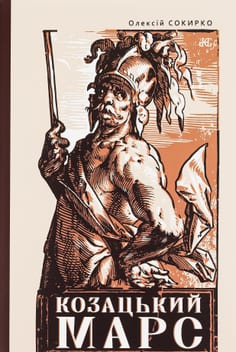 book (2023) Козацький Марс: Держава та військо Козацького Гетьманату в добу Мілітарної революції, 1648–1764 — Темпора A fundamental monograph on the army and the state of the Cossack Hetmanate in the context of the European Military Revolution (Tempora, 2023; ISBN 978-617-569-627-9). The scholarly foundation for the thesis about the early modern statehood of the Hetmanate.
 - paper (2024) Іван Мазепа як ранньомодерний володар — Український історичний журнал, 2024, № 5 An article that formulates the criteria of the "ideal type" of the early modern state, which are cited in the video.
- document (1710) Пакти й Конституції законів і вольностей Війська Запорозького — Український інститут національної пам'яті The treaty of Hetman Pylyp Orlyk with the Cossack officers (5/16 April 1710, Bender), preserved in Latin and Old Ukrainian redactions — a monument of contractual authority limited by law.
- web Люблінська унія 1569 — Encyclopedia of the History of Ukraine (Institute of History of Ukraine, NAS of Ukraine) A scholarly article on the Union of Lublin (in Ukrainian): the 1569 incorporation privileges concerning the Ukrainian voivodeships, the Lithuanian delegation's walkout from the Sejm on 1 March 1569, and the chronology of the union. The scholarly basis for the dates and mechanics of the Ukrainian lands' transfer to the Crown.