The Russo-Ukrainian War of 2014
The start of the aggression
Russian aggression against Ukraine began in 2014, despite the fact that the country’s neutral status was enshrined in its legislation. In August 2014, sabotage-and-reconnaissance and company-and-battalion tactical groups of the Russian army invaded the territory of Ukraine.
Crimea: “referendum” or occupation
The core myth of this war is that Crimea supposedly “chose Russia itself” in a referendum. The facts say otherwise. The annexation of Crimea is illegal — this is not the assessment of one of the parties but the qualification of the UN General Assembly (Resolution 68/262 of 27 March 2014), and the occupation itself began on the night of 26–27 February 2014[6]. No referendum was held in accordance with international law: what was staged under military occupation on 16 March 2014 was a survey of the population that, in the author’s words, “could be conducted even in your own apartment stairwell.” And references to the residents supposedly being “glad” prove nothing: under occupation a person does not speak freely — for saying otherwise one could lose everything, as the Crimean Tatars once did[7].
The “constitutional” argument about “the will of the people” fails too — the claim that “the people of Crimea” exercised the right to self-determination guaranteed by the UN Charter. This subject itself is a legal fiction. Dribnytsya points to the Crimean constitutions themselves: the Constitution of the Republic of Crimea of 1992 did indeed introduce a legal novelty — the notion of “the people of Crimea” — but the current Constitution of the Autonomous Republic of Crimea of 1998 removed that article, “because such a people never existed, does not exist, and cannot exist”[25]. Propaganda cites the 1992 edition, “forgetting” that the 1998 constitution is in force, in which there is no “people of Crimea” at all; both texts are publicly available on the website of the Verkhovna Rada of Ukraine and can be checked directly[26]. In other words, as of 2014 there was not even a constitutionally defined “people of Crimea” in whose name a “self-determination referendum” could be held. For more on the legal nullity of this “referendum,” see the article “The Transfer of Crimea, 1954”.
The thesis that “Ukraine itself gave up Crimea because it did not fight” also fails to withstand scrutiny. The reason was not “unwillingness” but the circumstances: in early 2014 there was a lack of leadership and clear orders (instructions came down from above saying “don’t shoot, we haven’t sorted it out yet”); the Ukrainian garrison in Crimea numbered fewer than 10,000 — mostly local conscripts, some of whom went over to the Russian side — against roughly 20,000 Russian troops in Sevastopol plus the “little green men”[8]. A full-scale battle in the cities would have cost enormous civilian casualties, so the troops were withdrawn precisely to prevent this. A forced retreat is not consent.
The date on its own medal: 20 February 2014
The most compelling proof that the operation was pre-planned was provided by Russia itself — with its own award. In a dispute with a proponent of the “civil war” version, Dribnytsia invites his interlocutor to check the Russian MoD departmental medal “For the Return of Crimea”: it was established on 21 March 2014 by Defence Minister’s order No. 160, and the campaign dates are stamped on its reverse — “20.02.2014 – 18.03.2014”[28]. The key here is the start date: 20 February 2014. That is, by the Russian army’s own official reckoning, the operation to “return” Crimea began on 20 February — when Yanukovych was still president of Ukraine (he fled Kyiv only on the night of 22 February, and the Verkhovna Rada voted to remove him on 22 February). The narrative of a “response to a coup” is contradicted by the aggressor’s own medal: the operation began before any “coup.” Tellingly, once this discrepancy was noticed, the Russian Ministry of Defence hastily removed the medal photos and the original press release from its website. The 20 February date is also consistent with the well-known timeline — the seizure of the Crimean parliament and Council of Ministers buildings on the night of 26–27 February[6] was preceded by a covert phase, officially recorded in metal by Russia itself.
The geopolitical pretext — and its absurdity
One of the main Russian theses is that a supposed “geopolitical confrontation between the USA and Russia” automatically justifies military action on the territory of a third country[1]. In the video dispute, Dribnytsya poses the obvious question: if this is really a quarrel between Moscow and Washington, why must it be “sorted out” precisely on the territory of Ukraine? This question receives no substantive answer[2].
UN Resolution 3314: no “terms” justify aggression
The same kind of “explanation” — that there were “weighty geopolitical reasons” or other circumstances that made the seizure of Crimea justified — has a clear legal answer. In a 2026 dispute with a pro-Russian interlocutor, Dribnytsya refers him to UN General Assembly Resolution 3314 (XXIX), “Definition of Aggression” (14 December 1974): its Article 3 lists the acts that constitute an act of aggression — including the invasion and annexation of foreign territory by the use of force — while its Article 5 states outright that no consideration (political, economic, military, or of any other kind) may serve as a justification for aggression, and that a war of aggression itself is a crime against international peace[27]. In other words, whatever “terms” and pretexts the Russian side invents for the occupation and annexation of Crimea, in the eyes of international law it remains aggression — and any attempt to justify it is, in the historian’s words, merely a justification of aggression.
The “Novorossiya” project
Vladimir Putin tried to realize the “Novorossiya” project — an artificial unification of the south-eastern regions of Ukraine into a quasi-state entity under the Kremlin’s control. The real attempt took the form of “people’s republics”: the Kharkiv, Zaporizhzhia, and Odesa ones. None of them held out — the local population did not support the project, and “Novorossiya” never extended beyond the temporarily occupied areas of Donetsk and Luhansk regions. In the video, Dribnytsya directly calls this a failure[3].
”Russian Donbas” — an anachronism
A separate pillar of the justifications is that the Donbas was supposedly “Russian from time immemorial.” This is an anachronism on two counts at once. First, the very name “Donbas” is industrial, not ethnic: it is the Donets coal-and-industrial basin, which began to take shape only at the beginning of the 19th century[12]. As historian Nadiia Temirova clarifies, the term itself appeared in the first third of the 19th century — it was introduced by mining engineer Yevhraf Kovalevsky (who, incidentally, had Ukrainian roots) as an abbreviation of “Donets coal basin”[16]. In other words, it is a geological-industrial category, not the name of an “age-old Russian land.”
And the industrial Donbas itself was an international project. The first deposits on an industrial scale began to be developed only in the second half of the 19th century: in 1869 the Welshman John Hughes founded a metallurgical plant and the settlement of Yuzivka — present-day Donetsk. By 1900, 13 metallurgical plants were already operating within the bounds of the Donetsk and Luhansk regions, and the Donbas supplied over 90% of all-Russian coal output[19]. The industrial Donbas, on which the image of “Russian Donbas” rests, arose at the end of the 19th century as an international industrial project within the empire — and not as a “primordially Russian” land.
Second, before the 19th century there were simply no fixed borders here. The southern frontier of the Tsardom of Muscovy in the 17th century was the Belgorod defensive line (built from the 1630s) — a defensive belt against the raids of the Crimean Khanate; Belgorod was the southernmost line of Muscovy[13]. The steppe beyond it was no-man’s-land, a territory controlled by no one in any proper sense: Cossack sabers reached it too, but it did not thereby become “Russian”[14]. In the time of Bohdan Khmelnytsky (from 1648), Cossack wintering camps reached here; and the allegiance of a village was determined not by a line on a map but by whom it paid tribute to — the hetman or the Muscovite tsar[15]. Borders in the modern sense — with border guards and barbed wire — began to take shape only in the 19th century[14]. Projecting present-day ethnopolitical categories onto the 17th century is therefore a methodological sleight of hand on which the myth rests.
Third, it was not “Russians in general” who settled this steppe, but above all Cossacks. As Temirova shows, serf-bound Muscovy had no free population for the dangerous frontier, so Cossacks were taken into guard service; it was precisely Cossacks with their families who built and populated the first fortress-cities in the north of the region (including present-day Sloviansk, 1676), which guarded the salt works[17]. The southern part is even more telling: until the destruction of the Zaporizhian Sich in 1775, the Azov-coast lands belonged to the Kalmius palanka of the Zaporizhian Host — an administrative unit of the Cossack state. And only after the palanka was abolished, in 1779, were about 30,000 Greeks expelled from Crimea brought here, while in the first quarter of the 19th century the region was swept by German (Mennonite) colonization — all of this already within the framework of an imperial policy of population replacement, not “age-old Russianness”[18]. In other words, before the arrival of the empire the Donbas was a Cossack steppe, not a “Russian land.”
The context of military theory
In the video dispute, the author draws on a classic of military theory — the 19th-century Prussian general Carl von Clausewitz. One of Clausewitz’s key principles: the aggressor always presents himself as peace-loving. This is not a rhetorical device but a functional requirement. It is advantageous for the aggressor that the victim offer no armed resistance — so he always calls to “reach an agreement,” to “stop the bloodshed,” to “find a compromise” — on his own terms.
This principle helps to correctly interpret the Kremlin’s calls for “peace” in Ukraine from 2014 onward: this is not a search for compromise but a tactical move to consolidate territories already seized.
”There is no war — there is mobilization”
A derivative technique of denial is the thesis “you have no war, you have mobilization.” In the video dispute, the author demonstrates its untenability: mobilization is one of the elements of war, and the fact that the war was not formally declared changes nothing[4]. The history of Russia itself confirms this. Over the past hundred years it has declared mobilization three times: in 1914, which started the First World War; in 1941, when Stalin declared mobilization against Germany (the Soviet “Great Patriotic War”); and in 2022. The first two times turned into world wars[5].
The “NATO threat” — rhetoric invented in 2007
The thesis of a “defensive” Russian war against NATO does not survive elementary chronology. Both Ukraine and Russia itself were participants in NATO’s Partnership for Peace programme: Ukraine joined it in February 1994, and Russia in June of that same 1994. For years, in other words, both countries cooperated with the Alliance in one and the same format, and there was no talk in Moscow of any “threats” from NATO.
As Dribnytsya notes, the rhetoric of a “NATO danger” held only “up to a point,” and the turning point was Putin’s Munich speech of 10 February 2007 — it was then, in the historian’s words, that the idea of a “threat” was in effect “invented by comrade Putin”[23]. In other words, the “NATO threat” is not the cause of the war but a pretext constructed after the fact: before 2007 even the Kremlin itself did not see an enemy in the Alliance.
The loyalty of the security bloc: an oral claim by the historian
Separately, Dribnytsya advances a strong claim about the personnel dependence of Ukraine’s security bloc on Moscow: namely, that under Kravchuk, Kuchma, and Yanukovych the heads of the SBU, the General Staff, and the high command were citizens of Russia, to whom Yanukovych personally — already as president — granted Ukrainian citizenship, so as to keep “a good neighbor at hand”[24].
This should be read specifically as the historian’s oral assessment, not as a documented, established fact: in such a sweeping form (for all three presidents) the thesis is not confirmed. Under Yanukovych, the heads of the SBU (Valeriy Khoroshkovsky, Ihor Kalinin, Oleksandr Yakymenko) held office as citizens of Ukraine — though public accusations of Russian citizenship and of FSB penetration of the Ukrainian special services were indeed leveled at Yakymenko. That is, the claim points to a real problem of pro-Russian influence within the security bloc of the Yanukovych era, but the generalization Dribnytsya offers goes beyond what is documented.
Why Russia attacked: revanchism, not NATO
A separate question is the real cause of the invasion. According to the analysis of historian Serhiy Gromenko, it is not “NATO expansion” but imperial revanchism — revenge for the defeats of the 1990s, when Russia failed to take Crimea solely because of internal troubles (the constitutional crisis of 1993, the war in Chechnya)[11]. The model was the Russo-Georgian War of 2008: having seized South Ossetia and Abkhazia, Russia, despite an economic collapse, consolidated politically, and Putin’s ratings soared; the same scheme was repeated for Crimea in 2014, plans for which had existed since at least 2008[9].
Hence an important conclusion: this is not only Putin’s war. According to polls, 60–67% of Russians support it and believe they are waging war against the West, and do not regard Ukraine as a subject in its own right; a minority (about 15–25%) demands that it continue as a “holy war”[10]. Putin’s personal responsibility is indisputable, but to reduce everything to him alone is mistaken: imperial power kept Russia for centuries from maturing into a political nation, and contemporary Russia, according to Gromenko, resembles a defeated but unreckoned-with Germany after the First World War[11].
Why Crimea specifically: the trauma of the Russian consciousness
Gromenko separately explains why the revanchism fixates precisely on Crimea. The reason is not only military or economic but also “traumatic.” Without Crimea, Russian history de facto has no antiquity and no early Middle Ages — only a deep periphery remains. All the “great” ancient history — the Hellenic city-states, the Roman-Byzantine heritage — is geographically concentrated in Crimea, not in core Russia. That is why, each time Russia takes possession of Crimea — at the end of the 18th century, at the beginning of the 20th, or now in the 21st — it “warms” the national pride of the “great Russian”[20].
To this is added the myth of Sevastopol. For the past century and a half the city has been presented as a “city of Russian glory,” even though historically Russians suffered heavy defeats there — both in the Crimean War and in the Second World War. Gromenko calls this a paradox of collective psychiatry: the real defeats do not destroy the myth but on the contrary feed it[21]. In other words, the Kremlin needs Crimea not as a territory but as the symbolic foundation of imperial identity — hence the urgency of the 2014 annexation.
Tellingly, the strategic inseparability of Crimea from Ukraine was understood by Ukrainian statesmen themselves — long before 2014. Hetman Pavlo Skoropadsky wrote as early as 1919 that Ukraine could not exist without Crimea: it is a “torso without legs,” because whoever holds the peninsula will threaten Ukraine both in the Azov region and in Odesa, and it is impossible to fully develop the south without a Ukrainian Crimea[22]. The 1918 negotiations of Skoropadsky’s government with the Crimean and Kuban regions are a separate story, to which Gromenko devoted a monograph.
What this means for history
The Russo-Ukrainian War of 2014 became the first attempt since 1945 at a forcible redrawing of borders in Europe. Its full-scale continuation in 2022 confirmed that the “Novorossiya” project had not disappeared but had only been temporarily shelved.
Related persons
- Vitaliy Dribnytsya — Historian, author of the 'Vox Veritatis' channel
- Serhiy Gromenko — Candidate of Historical Sciences, columnist
References
- [1] paraphrase
Один из основных российских аргументов — что это «противостояние США и России» якобы оправдывает военные действия. Но это никак не объясняет, почему «разборки» должны происходить именно на территории Украины.
Back to text - [2] paraphrase
На прямой вопрос «почему именно на территории Украины, а не на территории России или США» содержательного ответа не звучит.
Back to text - [3] summary
Проект «Новороссия» — Харьковская, Запорожская, Одесская «народные республики» — провалился: ни одна из них не удержалась, за пределы ОРДЛО проект не вышел.
Back to text - [4] paraphrase
«У вас нет войны — у вас есть мобилизация». Но без мобилизации войны не бывает: мобилизация — это один из элементов войны, и то, что войну официально не объявили, не меняет никакого значения.
Back to text - [5] paraphrase
За последние сто лет Россия объявляла мобилизацию три раза: в 1914 году — началась Первая мировая война; в 1941-м Сталин объявил мобилизацию против Германии; третий раз — сейчас. Первые два раза это были мировые войны.
Back to text - [6] summary
Крым незаконно аннексирован — это понимание Генеральной Ассамблеи ООН, а не моё личное мнение; оккупация Крыма началась в ночь с 26 на 27 февраля 2014 года.
Back to text - [7] summary
Референдума в соответствии с международным законодательством проведено не было: то, что провели под оккупацией, — это опрос населения, который можно устроить хоть у себя в подъезде. А то, что жители якобы рады, ничего не доказывает: человек понимает, что если скажет другое, будет как с крымскими татарами — потеряет всё.
Back to text - [8] summary
Воевать за Крым полномасштабно не стали не потому, что не хотели: в начале 2014 года не было руководства (приказы «не стреляйте, мы ещё не разобрались»), украинский гарнизон в Крыму был меньше 10 000 — в основном местные призывники, многие перешли на сторону РФ, — против примерно 20 000 российских военных в Севастополе плюс «зелёные человечки». Войска вывели, чтобы не допустить массовой гибели мирного населения.
Back to text - [9] summary
Моделлю стала російсько-грузинська війна 2008 року: Росія захопила Південну Осетію й Абхазію і, попри економічний провал на тлі кризи 2008-го, політично згуртувалася, а рейтинги Путіна злетіли. Ту саму модель повторили для Криму 2014-го; плани захоплення Криму існували щонайменше з 2008 року.
Back to text - [10] summary
Це не лише війна Путіна: за опитуваннями 60–67% росіян підтримують її і вважають, що ведуть війну із Заходом, а Україну не сприймають як суб'єкт; меншість (~15–25%) вимагає продовження як «священної війни». Особиста провина Путіна беззаперечна, але вважати це «війною тільки Путіна» — велика хиба.
Back to text - [11] summary
Глибша причина — імперський реваншизм, реванш за поразки 1990-х (тоді Росія не змогла відібрати Крим лише через внутрішні негаразди: криза 1993 року, війна в Чечні). Імперська влада завжди заважала Росії дозріти до політичної нації; сучасна Росія нагадує Німеччину після Першої світової — переможену, але без переосмислення.
Back to text - [12] summary
«Донбасс» — это Донецкий угольно-промышленный бассейн, он начал формироваться в начале 19 века; первые залежи разрабатывал Джон Хьюз, и Юзовка — это нынешний Донецк. Это промышленное, а не этническое понятие.
Back to text - [13] summary
Для 17-го века понятия границы в современном понимании не существовало. Южная граница Московского царства — это Белгородская линия; Белгород был самой южной линией России, построенной для защиты от Крымского ханства.
Back to text - [14] summary
Дальше за Белгородской линией где-то были и казацкие сабельки, но это не было ни Россия, ни особо подконтрольная территория — ничейная, грубо говоря. Границы в том виде, как мы их сейчас понимаем, стали формироваться в 19 веке.
Back to text - [15] summary
Краевед писал, что при Богдане Хмельницком, в 1648, там располагались казачьи зимовники. Границ как таковых не было: если село платило дань гетману — считалось украинским, если платило дань московскому царю — формально считалось московским.
Back to text - [16] summary
Сам термін «Донбас» — набагато пізнішого походження: він з'являється в першій третині XIX століття, з легкої руки гірничого інженера, ад'юнкта Петербурзької академії наук Євграфа Ковалевського, який мав українське коріння. Тобто це геолого-промислова, а не етнічна назва.
Back to text - [17] summary
Заселення Донецького регіону йшло за участі козаків: кріпацька Московія не мала вільного населення, тож на сторожову службу починають приймати козаків. Перші фортеці й міста-фортеці (зокрема сучасний Слов'янськ, 1676 рік) засновують у північній частині регіону, щоб охороняти соляні варниці; будували й селилися в них саме козаки з сім'ями.
Back to text - [18] summary
До руйнування Запорізької Січі в 1775 році цю територію — ділянку в Приазов'ї — займала Кальміуська паланка Війська Запорозького. Лише після скасування паланки, у 1779 році, сюди привели близько 30 тисяч греків, виселених із Криму; згодом, у першій чверті XIX століття, регіон охопила німецька (менонітська) колонізація — все це в контексті імперської політики заміщення населення.
Back to text - [19] summary
Промисловий Донбас — міжнародний проєкт: 1869 року валлієць Джон Юз починає будівництво металургійного заводу на території сучасного Донецька (звідси Юзівка). На 1900 рік у межах Донецької й Луганської областей працювало вже 13 металургійних заводів, а Донбас давав понад 90% загальноросійського видобутку. Індустріальний Донбас постав наприкінці XIX століття — а не «споконвіку».
Back to text - [20] summary
Без Криму в Росії де-факто немає античної та ранньосередньовічної історії — лишається глибока периферія. Уся реальна давня історія — еллінська, римсько-візантійська — була зосереджена переважно в Криму. Тому щоразу, коли Росія отримує Крим, чи це кінець XVIII століття, чи початок XX, чи зараз у XXI — це гріє російську національну гордість, гордість «великого росіянина».
Back to text - [21] summary
У Криму розташований Севастополь, який останні 150 років — гордість російських моряків. Парадокс колективної психіатрії: у Севастополі росіяни зазнали важких поразок — і в Кримську війну, і в Другу світову, — але міф про «місто російської слави» настільки сильний, що історія не може його зруйнувати.
Back to text - [22] summary
Це розумів ще гетьман Скоропадський, який писав (1919), що Україна не може жити без Криму — це як тулуб без ніг: хто б не володів Кримом, він загрожуватиме Україні і в Приазов'ї, і в Одесі. Розвивати південь, якщо Крим не буде українським, неможливо.
Back to text - [23] paraphrase
И Украина, и Россия принимали участие в программе НАТО «партнёрство ради мира», и никто не говорил ни о каких угрозах. Это было до поры до времени — вот 2007 год, мюнхенская речь. Так это придумано товарищем Путиным: какая угроза, кому нужна-то Россия?
Back to text - [24] summary
Во времена Кравчука, Кучмы, Януковича практически вся глава СБУ, Генштаб, Верховная Команда — все граждане Российской Федерации, которым лично Янукович как президент имел право давать гражданство Украины, чтобы иметь под рукой доброго соседа.
Back to text - [25] paraphrase
В конституции 92 года была такая юридическая новация, введена под названием «народ Крыма». А в конституции 98 года эту статью изъяли о народе Крыма, поскольку такого народа не было, нет и быть не может.
Back to text - [26] summary
Они рассказывали, что в конституции был «народ Крыма» и этот народ сам определился — ведь по уставу ООН каждый народ имеет право на самоопределение. Но в 98 году в конституции ничего этого не было. Эти конституции в открытом доступе, на сайте Верховной Рады Украины — можно спокойно загрузить, посмотреть и перепроверить.
Back to text - [27] paraphrase
Если б ты читал резолюцию ООН 3314, где в статье третьей даётся понятие агрессии, а в статье пятой написано, что всякие термины для оправдания агрессии, которые несут россияне, не россияне, кто угодно, — это всего лишь оправдание агрессии. Вот сейчас ты занимаешься просто-напросто оправданием агрессии.
Back to text - [28] summary
На медали министерства обороны Российской Федерации «За возвращение Крыма», учреждённой 21 марта 2014 года приказом номер 160, написаны даты 20.02.2014 – 18.03.2014. Обратите внимание — 20 февраля, а президентом в это время ещё был Янукович.
Back to text
Sources
-
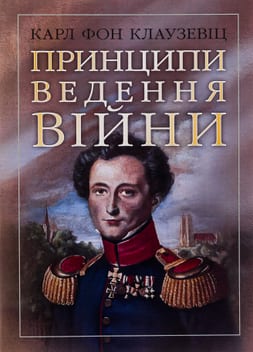 book (2023) Принципи ведення війни — Tsentr Navchalnoi Literatury A classic work on military theory by the 19th-century Prussian general (Ukrainian edition, 2023); the principle that 'the aggressor always presents himself as peace-loving'
 - document (1990) Декларація про державний суверенітет України Section IX enshrined Ukraine's intention to be a neutral state
- document (2014) Резолюція Генеральної Асамблеї ООН 68/262 «Територіальна цілісність України» UN General Assembly Resolution of 27 March 2014: it affirmed the territorial integrity of Ukraine within its internationally recognized borders and declared the 'referendum' in Crimea on 16 March 2014 to be without legal validity.
- book (2021) Скоропадський і Крим. Від протистояння до приєднання — Nash Format A monograph by historian Serhiy Gromenko (Nash Format, 2021) on the 1918 negotiations of Hetman Skoropadsky's government with Crimea and the Kuban; a source for the thesis on the strategic inseparability of Crimea from Ukraine.
- document (1992) Constitution of the Republic of Crimea of 6 May 1992 The text of the first Crimean constitution (6 May 1992) on Ukraine's legislation portal; its preamble and sovereignty articles invoke the "people of Crimea" — the very legal novelty that the 1998 constitution abolished. In Russian/Ukrainian.
- document (1998) Constitution of the Autonomous Republic of Crimea (Law of Ukraine "On Approval of the Constitution of the Autonomous Republic of Crimea") The current Constitution of the ARC, adopted by the Supreme Council of Crimea on 21 October 1998 and approved by the Verkhovna Rada of Ukraine on 23 December 1998 (Law No. 350-XIV): it no longer mentions any separate "people of Crimea." In Ukrainian.
- document (1974) UN General Assembly Resolution 3314 (XXIX) "Definition of Aggression" UN GA Resolution 3314 (XXIX) of 14 December 1974 (full text; University of Minnesota Human Rights Library). Article 3 lists the acts that qualify as an act of aggression (including invasion and annexation by the use of force), while Article 5 states outright that no consideration of whatever nature — political, economic, military, or otherwise — may justify aggression, and that a war of aggression is a crime against international peace. Basis for verifying Dribnytsya's claim about Crimea.
- web (2014) The Online Debate Over A Mysterious Russian 'Medal' An RFE/RL article (April 2014) on the Russian departmental medal 'For the Return of Crimea': established by Russian Defence Minister's order No. 160 of 21 March 2014, presented by Shoigu on 25 March, with the campaign dates '20.02.2014–18.03.2014' on the reverse. The start date of 20 February falls at a time when Yanukovych was still president (he fled on the night of 22 February), and the Russian MoD hastily removed the medal photos and the original press release from its website once this discrepancy was noticed. Independent confirmation of the thesis that the operation was pre-planned.